
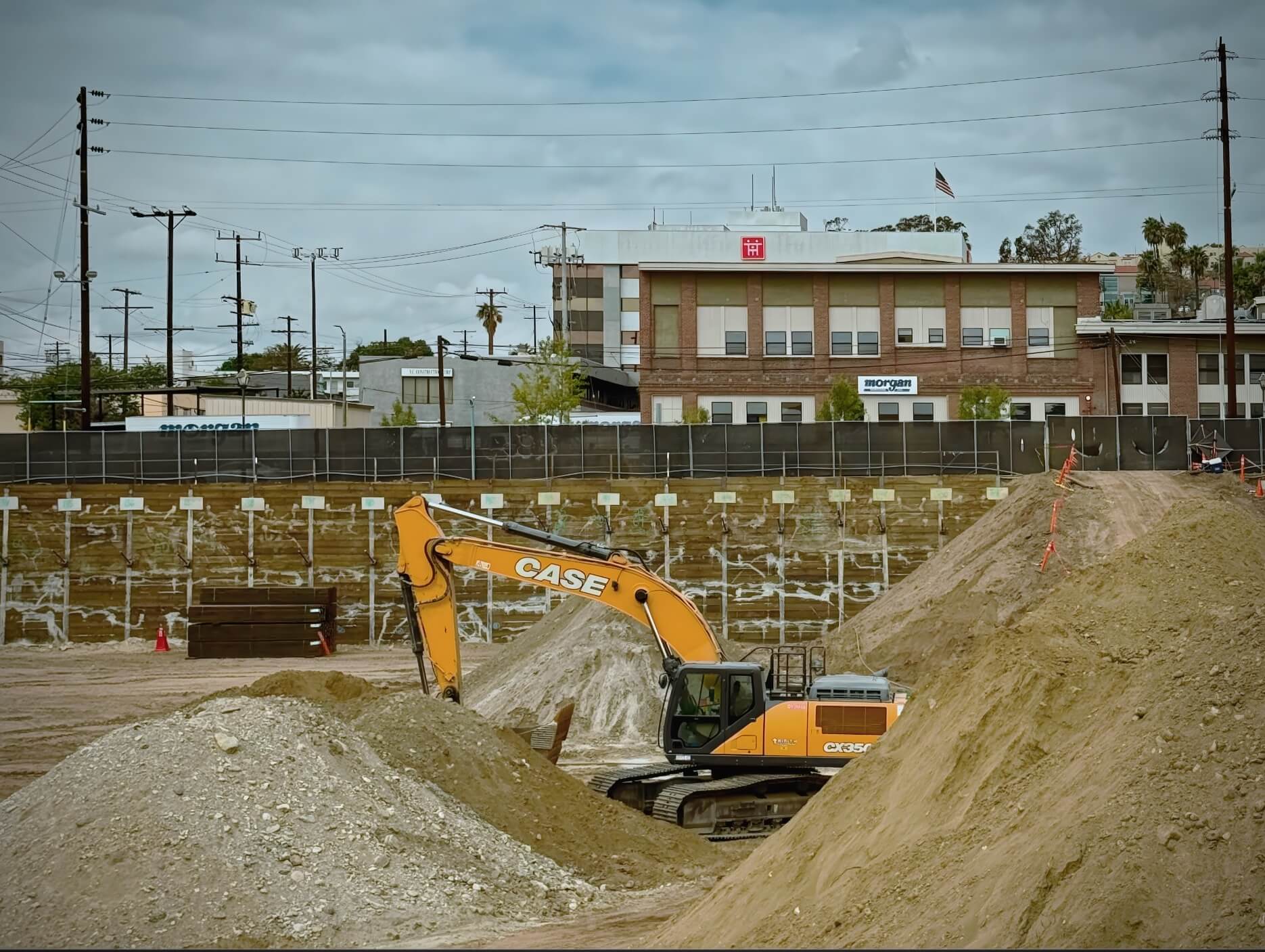
Next time you visit L.A.'s Chinatown, stroll to the northwest corner of College and Hill Streets, close your eyes, open your mind, and listen ever so carefully.
If you're psychic enough, you just might hear shouts of "Olé!" echoing from the past.
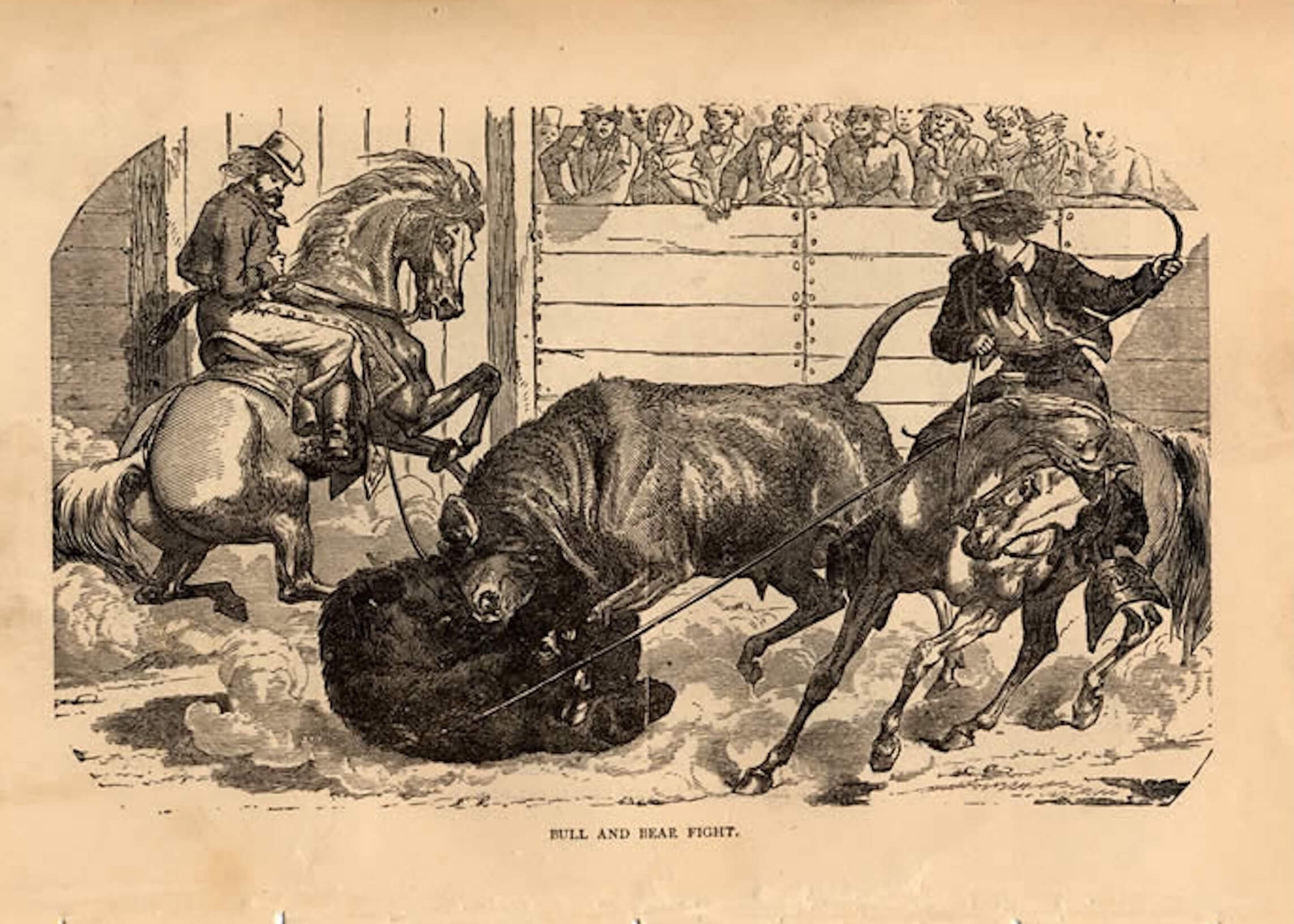
That's because, on this block, along what was once called El Calle del Toro (The Street of the Bull), brave matadors stared down angry, charging bovines. Yes, odd as it may seem, this block was home to the town's first “permanent” bullring, built around 1849.
During the Spanish and Mexican Eras, animal contests were staples of Californio life, with bullfights and bear-baiting making for popular pastimes at mission and town fiestas. In fact, Los Angeles' Ocampo Plaza, a small square in front of the Francisco Ocampo Adobe near Aliso Street, was infamous for its cockfights in the early pueblo. Historians believe that before the Calle del Toro arena opened, bullfights were similarly held in a makeshift space near Olvera Street and the town plaza.
During the Spanish and Mexican Eras, animal contests were staples of Californio life...
The Calle del Toro ring did not last long, however. By the 1860s, it had given way to the rapid growth of the unfortunately named “Sonoratown,” a barrio populated by Mexican families increasingly displaced by the city’s booming Anglo population. The neighborhood also boasted a thriving French quarter and other ethnic enclaves. Later, in the 1930s, it absorbed the city’s forcibly relocated Chinese community, becoming New Chinatown. (Union Station now occupies the site of L.A.'s original Chinatown.)
Pinpointing the Arena
The area's street grid also changed significantly, further obscuring the bullring's former existence. Early maps indicate that Calle del Toro was renamed Castelar Street in the 1870s, which in turn was swallowed up by Hill Street's northern extension and realignment in the 1960s.
In 2007 correspondence, La Nopalera author Howard Metcalfe, a local history buff specializing in early city maps, shared some clues about the arena's exact location. He was convinced it stood closer to the block's Yale side because of a large, round, sunken area then still visible in a parking lot. If true, the depression was the last vestige of the short-lived ring, which fell into disuse well before 1869, when the French Benevolent Society built a non-sectarian hospital on the block to combat smallpox.
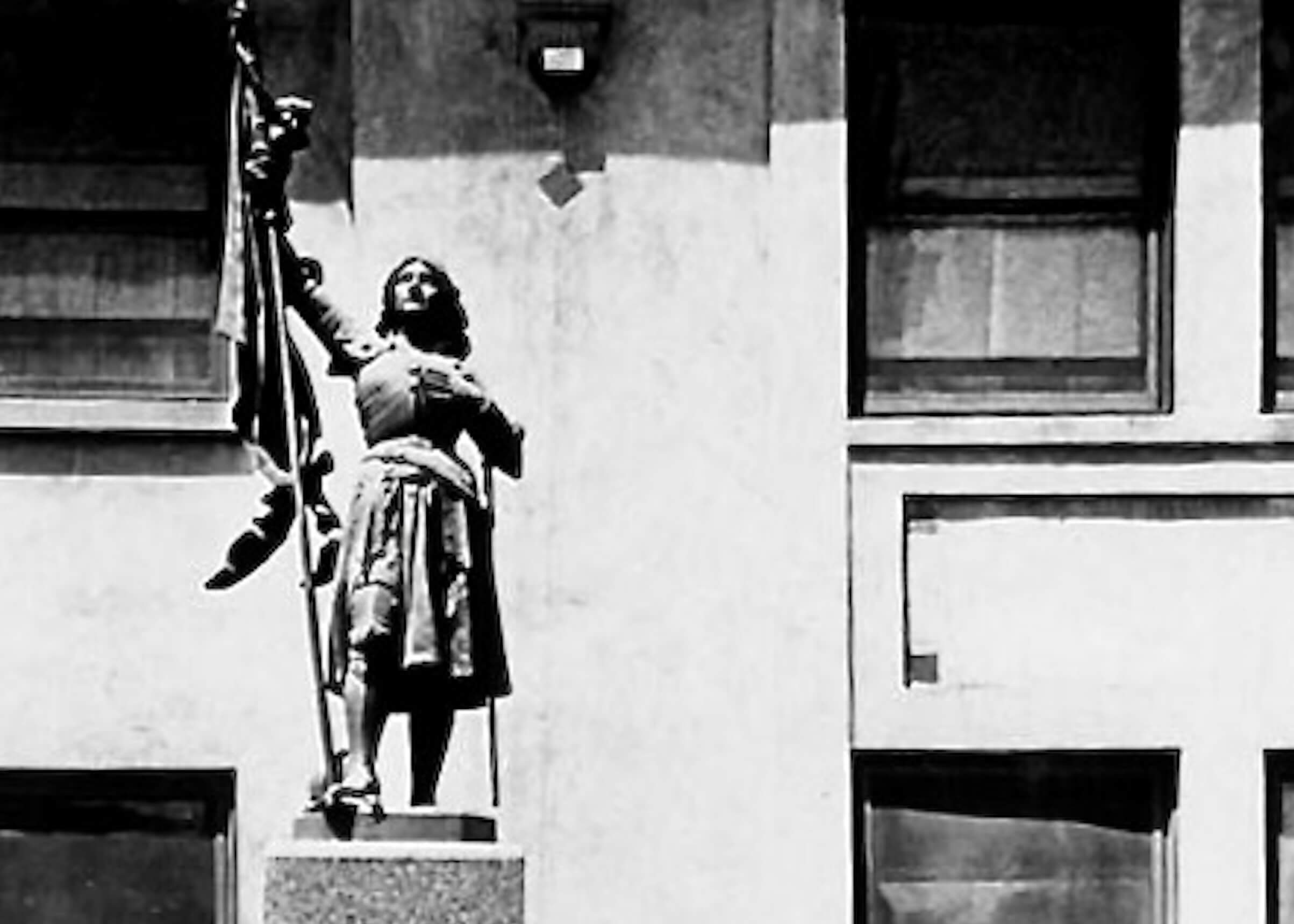
The Pacific Alliance Medical Center replaced that French hospital in the 1980s. But in a nod to history, the new Pacific Alliance facility allegedly preserved parts of the former hospital within its walls. For decades, a 1926 statue of Joan of Arc also stood on the grounds near College Street to underscore the site’s significance for the French community. But it’s all gone now.
The Calle del Toro ring did not last long... By the 1860s, it had given way to the rapid growth of the unfortunately named Sonoratown...
Erasing the History
As of this writing, the block is a huge gaping crater—the construction pit for a high-density apartment project that has sparked concern among local preservationists. They argue the developer failed to properly disclose historic structures on the site (namely remnants of the French Hospital within the Pacific Alliance building) and then leveraged a state-level legal loophole that allowed demolition while bypassing typically required historical assessments. Requests for such a historical evaluation fell on deaf ears.
Reached for comment via email, local French-heritage chronicler C.C. de Vere of Frenchtown Confidential said the developer ultimately agreed to recover any artifacts found at the site and safely preserve and reinstall the iconic Joan of Arc statue. But until the new construction is complete and the statue restored, de Vere and other preservationists have taken a wait-and-see stance on any promises.
One wonders what—if anything—the big dig has unearthed to date.
As for the bullring, whether any beasts were actually killed in the arena remains a matter of historical conjecture. Los Angeles bullfighters may have practiced the less bloody "Portuguese" form of the sport in which matadors goad, tag, and spare the bull. Either way, soon after California joined the Union in 1850, the state curtailed, then outlawed, contests that deliberately harm animals.
No doubt bulls, bears and roosters everywhere breathed a sigh of relief.
Location: 531 W. College Street, New Chinatown, Los Angeles, between N. Hill and Yale Streets.
Key Sources: Early Los Angeles Maps, Library of Congress and LAPL; Howard Metcalfe, La Nopalera website (accessed 2007); Jean Poole, Tevvy Ball, "El Pueblo: The Historic Heart of Los Angeles."